
The Condo Trap – Non Warrantable Explained
Updated: May 6
Introduction
California condos often look like the

affordable gateway to homeownership. But hidden beneath the surface is a financing nightmare: the “non‑warrantable” condo. In 2026, these properties can create financial hardship for existing condo owners, and a financing nightmare for unsuspecting homebuyers. Understanding what makes a condo warrantable—or not—can save you thousands if you are a homebuyer, and can save you from a financial hardship (or even disaster) if you accidentally get caught up in one.
In this post, we will explain what makes a condo “non-warrantable”, financing available for these condos, and what you can do if you already own a non-warrantable condo.
What Does “Warrantable” Mean?
A warrantable condo meets Fannie Mae and Freddie Mac guidelines. That makes it safe for banks to lend on, and then re-sell to Fannie Mae and Freddie Mac afterwards to free

up their money to originate more loans. When a condo is non-warrantable, Fannie Mae and Freddie Mac will not purchase the loan from the originating lender, forcing the lender to keep it in their own books, or to re-sell to other investors (e.g., “portfolio lenders”). Lenders don’t generally like to keep these residential loans on their own books, because that keeps them from doing more loans. And if they sell a loan originally intended for Fannie Mae or Freddie Mac at a low interest rate, and sell to a Wall Street lender that depend a higher interest rate, the originating lender may make lower profit from the sell, if any.
Non‑warrantable doesn’t mean unsafe structurally—it means lenders see too much financial risk.
Top 5 Reasons Condos Become Non‑Warrantable
Structural Issues: California Senate Bill 326, effective January 1, 2020,
requires California condominium (and thereby townhome) associations to conduct
structural inspections of all "exterior elevated elements" (such as balconies, decks, and stairways)

that are supported by wood and located more than six feet above ground. For Fannie Mae and Freddie Mac loans, lenders now specifically ask in condo questionnaires if the association has any "critical repairs" or "significant deferred maintenance" identified in these inspections. If an SB 326 report reveals structural deficiencies that have not been addressed or funded, the entire complex may be deemed "non-warrantable," making it ineligible for conventional financing.
Legal Drama: If the HOA is suing the developer (e.g., the 10-yr construction defect for new constructions), lenders won’t touch the property until the lawsuit is resolved.
Low Reserves: HOAs must save for
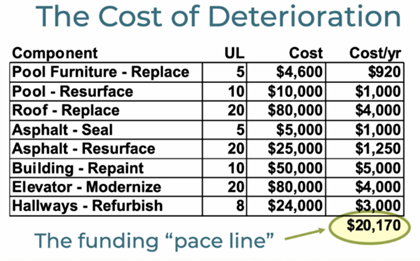
future repairs. Amount of reserve needed is generally based on a 3rd party “reserve study”. Low reserves signal financial instability, and potential for special assessments requiring homeowners to make capital contribution towards repairs, or higher HOA dues in the future. Lenders worry about potential loan default when HOA dues rise more than borrower can afford.
Investor Rule: While the “50% Investor Ownership Cap” has recently (as of March 18, 2026) been removed by Fannie Mae & Freddie Mac, too many units owned by one investors or by one person, or too many renter occupied units are still considered higher risk. For example, for HOAs with 5 to 20 units, a single entity may own a max of 2 units for the HOA to still be considered warrantable.
Too Much Commercial: If more than 35% of the total square footage of a building is used for non-residential or commercial purposes, lenders may refuse financing as well.
Why Buyers Should Care
Vast majority of residential lenders in the US sell their loans to Fannie Mae and Freddie Mac immediately after loan has close escrow. Non‑warrantable condos are ineligible, and therefore require other, non-conventional lenders (e.g., “non-QM” for Non-Qualified-Mortgage). These non-QM lenders often require bigger down payments, and/or higher mortgage rates, making it harder for homebuyers to qualify.
These few non-QM lenders also have “risk concentration” concerns and may limit the number of units they’d finance in a given community. This could be particularly challenging for the larger communities.
Re-financing may be impossible until the HOA fixes issues. This impacts resale value for years. We have first hand experience with a big (460+ units) community in Fremont, CA, where the HOA has been addressing the structural deficiencies for more than 5 years, have already done 3 special assessments for homeowners to contribute capital towards the necessary repairs, and expects another 2 years for the project to complete. During these 5 years, lenders have walked away from this community. Sellers can only sell to non-QM or “all cash” buyers. Property values have dropped significantly as a result, while nearby properties have held value.
Will it ever become warrantable?
Possibly, once the HOA resolves issues, and the HOA pays for Fannie Mae / Freddie Mac re-certification. That could take several years.
Conclusion
Before falling in love with a condo, ask one question: Is it warrantable? Don’t waste money on inspections if financing isn’t possible. Protect your investment by working with a broker who knows the red flags.
Feel free to share your experiences or insights in the comments section
See our client testimonials => https://www.abundance99.net/testimonials
Subscribe to our blog => https://www.abundance99.net/blog
Subscribe to our Youtube channel => https://www.youtube.com/@abundance99inc.3
Comments